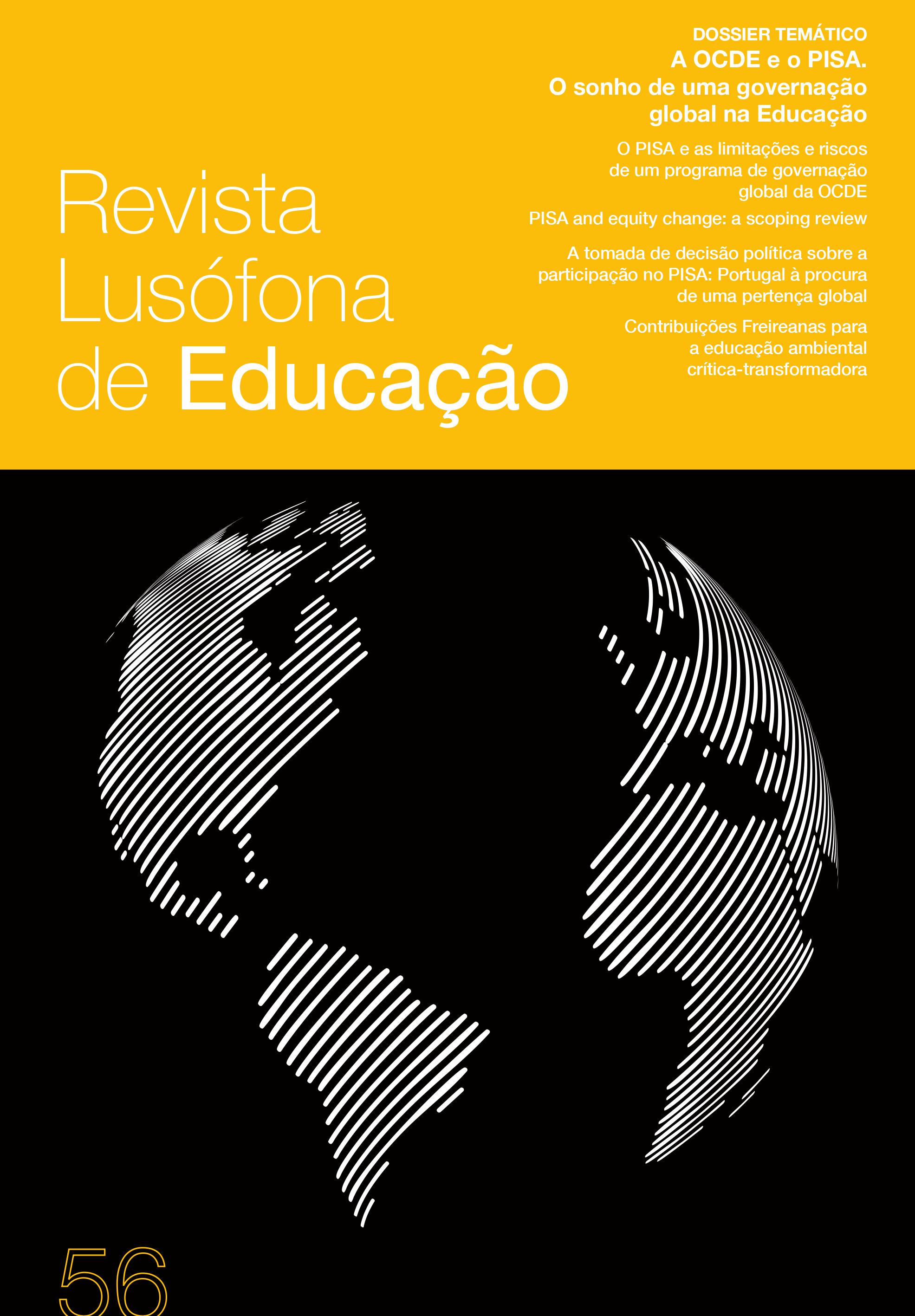
PISA and equity change: a scoping review
Abstract
Promoting equity has been and still is a fundamental challenge for educational systems around the world. While PISA has a stated goal of sharing information and guidance to shape national policies for achieving greater socio-economic equity, its actual role and the outcomes of the program are subject to much debate. This paper presents a scoping review of the available literature that focuses on the relationship between PISA implementation and (socio-economic educational) equity change. This review is twofold, including both (i) quantitative research aimed at gauging changes in equity indicators using PISA datasets, as well as (ii) qualitative research that discusses PISA’s impact on educational equity. Major databases were systematically searched, yielding 1180 hits. After independent assessment by different judges, a total of 51 articles met the criteria for inclusion, 27 of which qualitative and 34 quantitative. Analysis of the qualitative and quantitative literature is presented separately, both in tabular and narrative form, allowing the assessment of the amount, nature, and scope of the available literature and related gaps.
Keywords: PISA; Equity; Scoping review; SES; Literature review.
Downloads
-
Authors retain copyright of their work, without any payment, and grant the journal the right of first publication. The work is simultaneously licensed under a Creative Commons Attribution 4.0 International License (CC BY 4.0), which allows others to share (copy and redistribute the material in any medium or format) and adapt (remix, transform, and build upon the material for any purpose, even commercially), provided that proper credit is given to the author(s) and the initial publication in RLE is acknowledged.
-
Authors are permitted to enter into separate, additional contractual arrangements for the non-exclusive distribution of the version of the work published in this journal (e.g., depositing it in an institutional repository or publishing it as a book chapter), provided that authorship and initial publication in RLE are acknowledged.
-
Authors are allowed and encouraged to post and disseminate their work online (e.g., in institutional repositories or on their personal websites), as this can increase the visibility and citation of the published work (see The Open Access Effect).