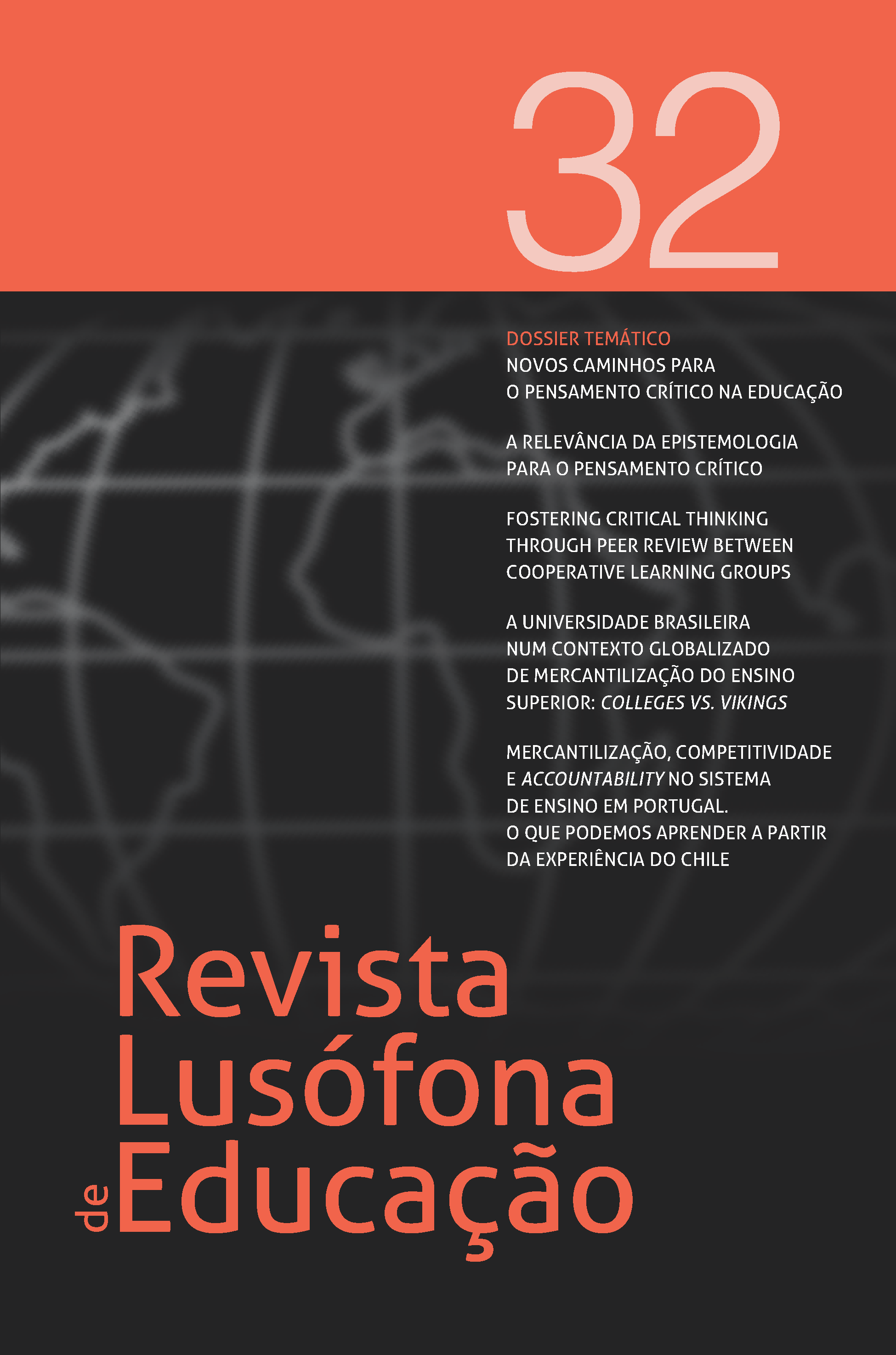
Fostering critical thinking through peer review between cooperative learning groups
Resumen
Educational policies keep stressing the importance of critical thinking skills for promotion of academic success in Higher Education, to facilitate transition into the labour market and to foster livelong learning. Curricula in Higher Education Institutions gradually meet this necessity, integrating strategies foreseeing the development of critical thought in students. However, at this level, we still commonly found teaching and learning strategies emphasizing a more or less passive knowledge transfer, focusing on the student’s ability to memorize in- formation. Peer review and feedback, allied to cooperative work, are important components of active learning and development of critical thinking skills pro- cess. It is therefore important to understand the role and influence of feedback provision in peer review activities between cooperative groups. This study analyses the perceptions and attitudes of 27 students in two Masters Courses on the feedback given in peer review activities (between groups), based on their responses to a survey. Results showed, among other aspects, that collaborative work and feedback exchange between groups fostered the contact with different perspectives towards the same situation, and that its critical analysis allowed the students to enhance different skills, the most referred one being the critical thinking.
Keywords: critical thinking; cooperative learning; peer review.
Descargas
-
Los autores y las autoras conservan los derechos de autor, sin ningún tipo de remuneración, y conceden a la revista el derecho de primera publicación. La obra se publica simultáneamente bajo la Licencia Creative Commons Atribución 4.0 Internacional (CC BY 4.0), que permite a otros compartir (copiar y redistribuir el material en cualquier medio o formato) y adaptar (remezclar, transformar y crear a partir del material para cualquier propósito, incluso comercial), siempre que se reconozca la autoría y la publicación inicial en la RLE.
-
Los autores y las autoras están autorizados a celebrar contratos adicionales de manera separada para la distribución no exclusiva de la versión de la obra publicada en esta revista (por ejemplo, depositarla en un repositorio institucional o publicarla como capítulo de libro), siempre que se reconozca la autoría y la publicación inicial en la RLE.
-
Los autores y las autoras tienen permiso y son alentados/as a publicar y difundir su trabajo en línea (por ejemplo, en repositorios institucionales o en su página personal), ya que esto puede aumentar la visibilidad y la citación del trabajo publicado (véase El Efecto del Acceso Abierto).